Good to know
What is included in an emergency roof repair visit?
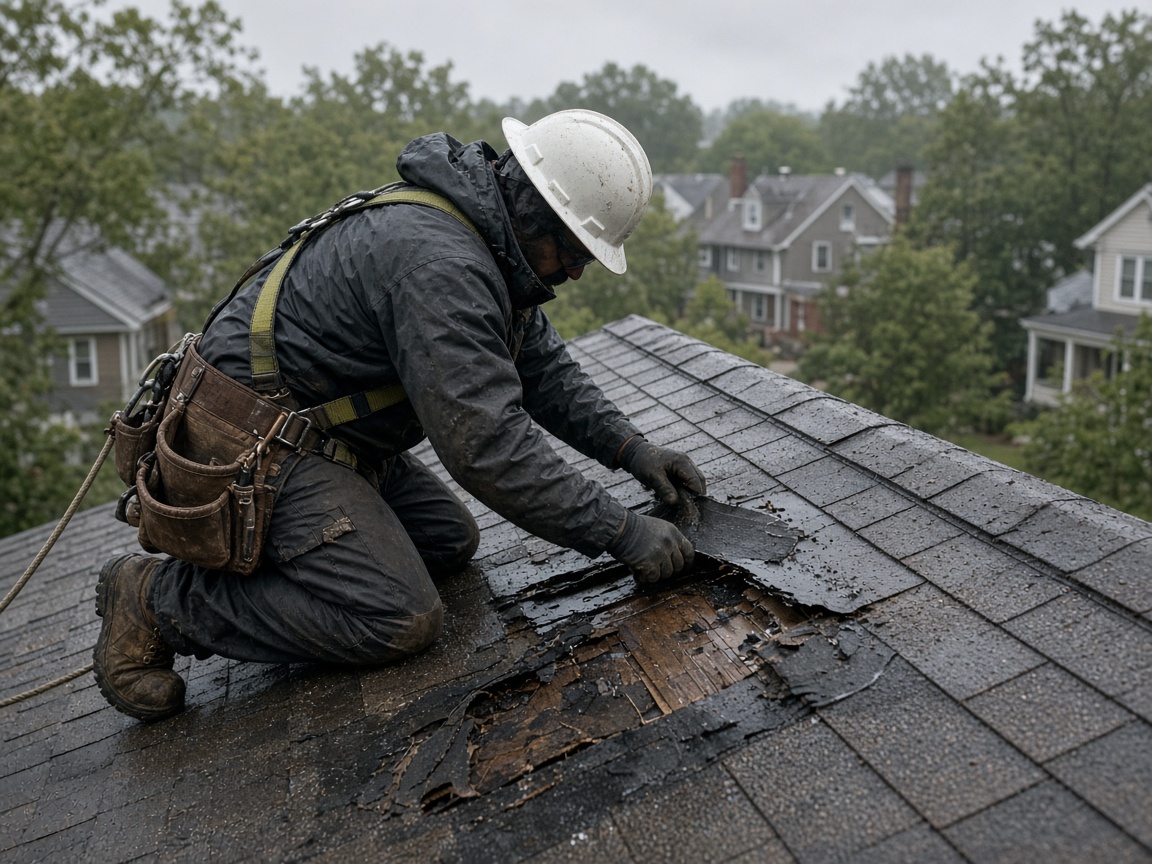
An emergency roof repair visit is built around three steps: stop the water, document what happened, and then make the lasting fix. The first step is about keeping rain out of the house. The provider you are connected with will look at the opening that is letting water in, whether that is a torn or creased shingle, a lifted ridge cap, damaged flashing, or a hole left by a fallen branch. At this stage the goal is protection, not a full rebuild.
Once water is controlled, a full inspection follows. In general roofing practice this covers the shingles or metal panels, flashing around chimneys and walls, pipe and vent boots, valleys, underlayment exposed at the opening, roof decking where it can be reached safely, gutters and downspouts, and ridge vents. Interior evidence such as ceiling stains, wet insulation and attic moisture matters too, because it shows where water actually traveled.
Photographs and written notes are usually part of the visit. These records help you understand the scope of the work, and they are useful if you later need to speak with an insurance adjuster or the city. Ask the provider to explain what was found in plain language before any permanent work is scheduled.
Which sub-services are common in emergency roof work?
Emergency calls rarely involve only one component. Common sub-services include shingle replacement on asphalt or architectural shingles, metal roofing panel repair, flashing replacement, pipe and vent boot replacement, valley repair, underlayment patching, roof decking repair, gutter and downspout reattachment, and ridge vent work. The right mix depends on the material already on the house and on how far water has traveled into the structure.
Tarping and board-up work are also sub-services that matter after a storm. A tarp covers an opening temporarily. It is not a permanent fix, and it should be checked and replaced as the permanent repair is scheduled. Ask whether the provider will remove the tarp and whether the same provider will return to complete the work, since those steps are sometimes handled separately.
Some homeowners also ask about interior work such as drywall, insulation or painting after a leak. Those trades sit outside roofing. A roofing provider may note the damage and recommend that a qualified tradesperson look at it, but the roofing scope itself stops at the roof assembly and its immediate edges.
What counts as a roof emergency?
A roof problem becomes an emergency when it allows water into the living space or threatens the structure right now. Typical signs include water actively dripping from a ceiling, a visible opening in the roof deck, a limb or tree through the roof, or shingles and flashing torn off during a storm with more rain on the way. A ceiling stain that is dry and not spreading can often wait for a scheduled inspection, but it still needs to be checked.
Huntsville's weather gives good reasons to take these signs seriously. The 1991–2020 normals show about 54.29 inches of annual precipitation, and December is the wettest month at 5.87 inches. Storm history is also part of the local picture. On April 27, 2011, the NWS Huntsville forecast area recorded 39 tornadoes, and Madison County was hit by a tornado 6 times that day. Wind-driven rain is a common reason a leak appears only in certain storms.
The Tennessee Valley setting and the broader Dixie Alley tornado corridor mean storm damage is a regular concern for many homes in the region, so storm-related leaks deserve prompt attention rather than a wait-and-see approach.
What happens during a temporary cover or dry-in?
A temporary cover, often called a dry-in, is the step that stops water from entering while permanent repair waits. The provider identifies the opening, removes loose or damaged material that could fail further, and installs a covering such as a tarp or temporary sheathing sized to the opening and secured to the roof. The goal is weather-tight protection for the interior.
Secure fastening matters. A tarp that is only weighted or loosely tied can tear in wind, so the cover should be anchored to the structure in a way that resists the conditions the house faces. Temporary covers are not designed to last indefinitely. A cover needs to be checked after the next significant storm and replaced when the permanent repair is completed.
If a limb has come through the roof, the first priority is still to make the opening weather-tight. Damage should be documented before debris is cleared where possible, and only then should the permanent repair begin. Clearing debris safely may require extra care, and homeowners should keep people away from unstable areas until a provider has assessed them.
Why does waiting make water damage worse?
Water moves along the path of least resistance. Once it reaches the underlayment, roof decking or attic insulation, it can soak materials that do not dry quickly. Wet decking can soften or rot, insulation loses effectiveness and can support mold growth, and drywall stains and sags. A few days of delay can turn a small, repairable leak into a larger replacement of interior finishes and structural materials.
Waiting also makes the source harder to find. Ceiling stains often appear far from where water entered, because water follows framing, wiring and ductwork before it drips. When an attic has been wet for a while, the evidence is harder to read. Documenting wet areas early helps a provider trace the path accurately.
Delay can also complicate documentation. Photographs taken soon after a storm show conditions before temporary repairs and cleanup change them. If you plan to file an insurance claim, ask your insurer how long you have to report storm damage, since that deadline depends on your policy.
What does the permanent repair include?
The permanent repair replaces what the temporary cover could only protect. The provider rebuilds the failed detail, which may be a flashing, a pipe boot, a valley, or a section of shingles or metal panels. Damaged underlayment and decking are replaced where needed, and new work is lapped so water sheds in the correct direction. Gutters, downspouts and ridge vents are reattached or repaired if they were part of the failure.
Local conditions can shape the scope. The 2020–2024 American Community Survey figures give a citywide median year structure built of 1985, and 58.3 percent of occupied units are owner-occupied. A roof and its flashing installed decades ago may be nearing the end of its service life. Neighborhood-level age figures are not available in the sourced material, so each house should be checked on its own condition.
Permits and historic rules can affect the work. The City of Huntsville states that some roofing permits can be obtained online, and projects needing plan approval go through ePlans Review. Zoning Administration approval is the first step for most building permit applications. Properties in a FEMA Special Flood Hazard Area must be submitted in person and need a Flood Development Permit first. The official city page reviewed does not state a blanket rule that every full re-roof needs a permit, so confirm the scope with the City of Huntsville Inspection Department before assuming either way.
Still have questions? We're happy to talk it through.