Good to know
What is included in a roof leak repair visit?
A roof leak repair visit usually starts with a conversation about where the water appears, when it appears, and what the weather was doing at the time. Homeowners who note whether a leak follows heavy rain, wind-driven rain, or a single storm give the local providers useful clues before anyone climbs onto the roof. The provider then checks the attic and the roof covering, working from the inside out and from the outside in so the two findings can be compared.
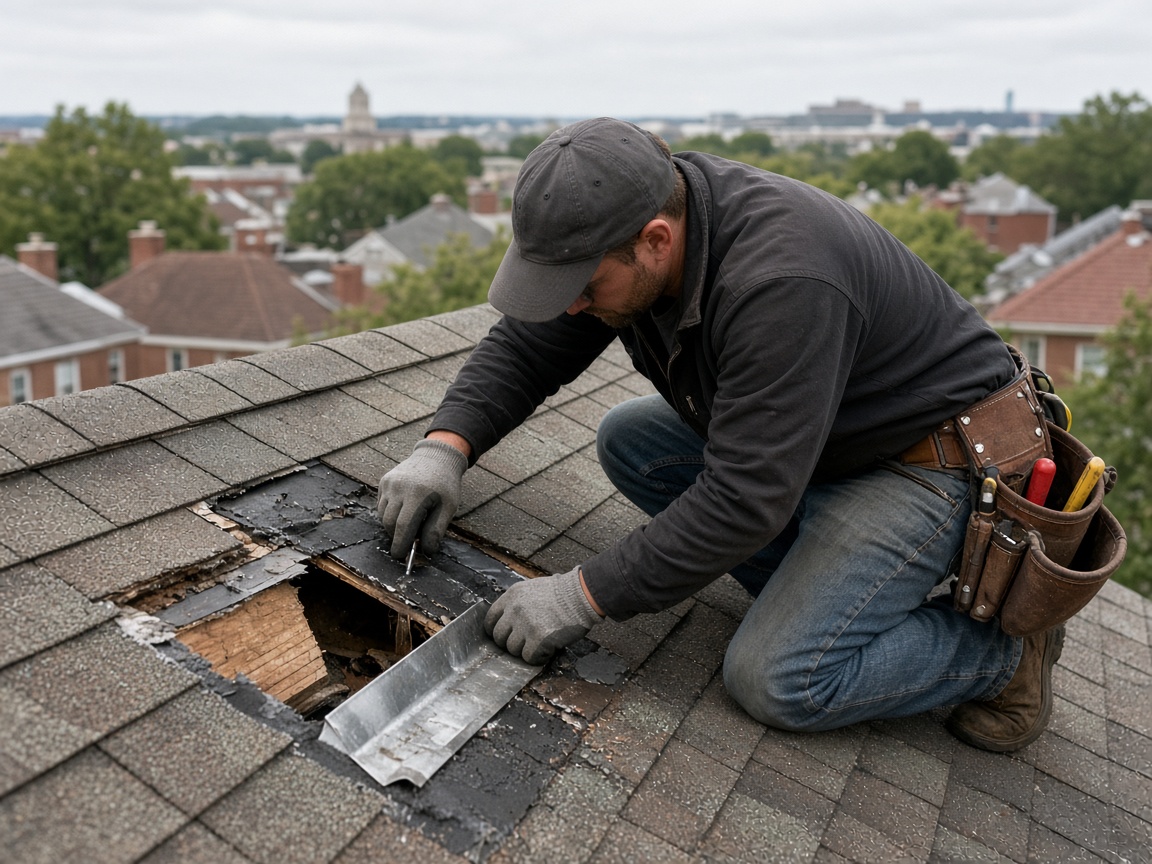
Typical included work covers the attic check, the roof surface around the suspected entry point, the flashing, pipe and vent boots, valleys, and the laps where shingles or metal panels overlap one another. Where decking or underlayment is wet, the provider should describe that condition in writing and photograph it before the area is closed up. Exactly what is included depends on the findings, so ask the provider to list the scope in writing before any work starts, and compare that list with what was discussed during the visit.
What sub-services fall under roof leak repair?
Roof leak repair often overlaps with related work. The sub-services most often tied to a leak include flashing replacement around chimneys, walls and skylights, pipe and vent boot replacement, valley repair, underlayment and decking repair where moisture has soaked in, shingle or metal panel replacement at the failed section, and gutter and downspout corrections when overflowing water runs back under the eave.
Ridge vents and roof decking belong to the same roof system. A provider may recommend ridge vent work if the leak traces back to ventilation, or decking repair if boards are soft, but those items should be listed separately so the homeowner can approve each one on its own merits. The local providers this site connects you with should explain why each sub-service is needed and what evidence supports it.
Why is the ceiling stain not always below the leak?
Water does not always drop straight down. It can run along a rafter, a sheathing seam or a nail line before it shows as a stain several feet away from the entry point. Wind-driven rain can also push water sideways under shingles and past flashing edges, so the stain may appear on a wall or ceiling far from the side of the house that took the hardest hits.
That is why patching the stain or the spot directly above it often fails. A provider who follows the water path through the attic can find wet insulation, darkened decking, or water tracks on framing that point back toward the real source. The citywide median year a structure was built in Huntsville is 1985, so many local roofs have spent decades exposed to weather, and aged flashing or sealant is a common place for water to find a path.
Where do Huntsville roof leaks usually start?
Huntsville's climate gives roofs a steady test. The 1991 to 2020 normals put annual precipitation at 54.29 inches, with December the wettest month at 5.87 inches and September the driest at 3.49 inches. A roof that has stayed dry through the drier months may first reveal a weak flashing or boot when the heavier winter rains arrive, so a leak that appears in December deserves the same careful trace as one that appears after a summer storm.
Severe weather adds stress. On April 27, 2011, the National Weather Service Huntsville forecast area recorded 39 tornadoes, and Madison County was hit by a tornado six times that day. Wind and hail can lift edges, crack coverings, and open seams that look sound from the ground. A leak that follows a storm should be traced to the failed detail rather than assumed to be the only damage.
Common entry points include plumbing vent boots, chimney and wall flashing, valleys where two slopes meet, step flashing along roof walls, skylight curbs, and the laps where one row of shingles or metal panels overlaps another. Gutters that back up can push water under the eave, so the provider should check the drip edge and gutter line during the same visit.
Neighborhood conditions also vary. Twickenham and Five Points include locally designated historic districts, Hampton Cove sits over Monte Sano on U.S. 431, Monte Sano lies on the city's eastern edge beside Monte Sano State Park, and South Huntsville runs from Whitesburg and Weatherly Heights to Bailey Cove. Each area shares the same basic roof systems, but the roof age, slope, tree cover and exposure can change where leaks start.
How is a leak traced without guessing?
A careful trace moves in steps. Start in the attic, ideally on a dry day, with a flashlight and a moisture meter if the provider uses one. Look for staining, damp insulation, darkened decking, or water tracks on framing. Mark the wettest area and measure its distance from the nearest penetration, valley or wall. Then examine the roof above that area, checking each flashing edge, boot collar, shingle or panel lap, and nail line in turn.
Controlled water testing is another method some providers use. Water is run on one section at a time while someone watches the attic, which isolates the entry point without relying on a guess. The provider should photograph the area before and after the test and before and after any repair, and should record the triggering conditions such as wind direction and rain intensity.
Homeowners can help by noting when the leak happens, which way the wind was blowing, and whether the stain grows over several rain events. Those notes give the local provider a timeline that narrows the search and reduces the number of surfaces that need to be opened.
Does a leak mean the whole roof needs work?
Not usually. A single leak often points to one failed detail, such as a cracked pipe boot, lifted step flashing, or a split valley. Rebuilding that detail so it sheds water is a different job from replacing the whole roof covering. Even so, the local provider should check the surrounding area, because one failed component can signal wider age-related wear that will show up again later.
Signs that the problem may be wider include leaks in several rooms, widespread granule loss, curling or brittle shingles, soft decking across more than one slope, or damage that returns after each storm. In those cases the provider should explain the findings slope by slope and separate storm damage from age-related wear, so the homeowner can choose between a targeted repair and a larger project based on evidence.
Permits can matter in some situations. The City of Huntsville states that some roofing permits can be obtained online, that projects requiring plan approval go through ePlans Review, and that Zoning Administration approval is the first step for most building permit applications. Projects in a FEMA Special Flood Hazard Area must be submitted in person and need a Flood Development Permit first. The city page does not state a blanket rule that every full re-roof needs a permit, so confirm the scope with the City of Huntsville Inspection Department before assuming a rule applies.
Homes in one of Huntsville's four locally designated historic districts, which are Five Points, Normal, Old Town, and Twickenham, need extra care. All exterior property changes there require a Certificate of Appropriateness or an Expedited Staff Review letter before work begins. Maintenance and repair are not covered by that rule when no replacement materials are needed, and roof color changes and gutters are among the items eligible for Expedited Staff Review.
Still have questions? Share your leak details and we'll explain the next step.