Good to know
What counts as storm damage on a Huntsville roof?
Storm damage is physical harm that a severe weather event causes to the roof system. Common signs include shingles that are torn, lifted, creased or missing, metal flashing that is bent or pulled loose, pipe and vent boots that are split, ridge vents knocked out of place, and gutters or downspouts that are dented or separated from the fascia. Many of these signs are not visible from the driveway, which is why a roof that looks fine from the ground can still be letting water in.
Huntsville sits in the Tennessee Valley, which is part of the Dixie Alley tornado corridor, so wind and hail events are a real planning concern for local homeowners. Local providers usually inspect each roof slope separately, because wind and hail rarely strike every side of a house equally. Damage on a windward slope can look very different from the leeward side. Underlayment, roof decking and valleys also deserve attention, since water can travel along a valley or under a shingle course long before a stain appears indoors.
The neighborhoods the pros we connect you with cover range from Twickenham and Five Points near downtown, to Jones Valley southeast of downtown along Whitesburg Drive and Airport Road, to Hampton Cove over Monte Sano on U.S. 431, and Monte Sano on the eastern edge beside Monte Sano State Park. South Huntsville runs from Whitesburg and Weatherly Heights to Bailey Cove. Each of these areas has roofs exposed to the same regional weather, so the inspection approach stays consistent while the local details change.
How is hail damage different from wind damage?
Hail usually leaves impact marks. Asphalt and architectural shingles can show bruised mats, granule loss that exposes the asphalt beneath, or small fractures. Soft metal such as gutters, vents and metal flashing often shows dents and dimples, which are among the clearest signs that a hail event reached the property. Hail can also crack older shingles that have already lost flexibility, so a provider should check the age and condition of the material alongside the impact marks.
Wind damage tends to look like lifting, creasing and missing material. It is most common along eaves, rakes, ridges and corners, where uplift forces are strongest. Wind can also drive rain under shingles and past flashing. That is why some Huntsville homeowners notice leaks only during wind-driven rain, even when the roof looked intact on a calm day. A provider who checks for both hail and wind signs will examine the windward edges as well as the soft metal around the roof, and will record which signs are present on which slope.
What should you document after a storm?
Documentation protects the decisions you have to make next, whether that is a repair, a temporary cover, or a conversation with an insurance adjuster. Take wide and close photos of each roof slope from the ground or from safe vantage points, photograph the gutters, downspouts and siding, and note the date and time of each photo. Keep a record of interior water staining, dripping, or damp insulation, and take those photos before anything is cleaned up or moved.
Huntsville's climate makes this record more useful. The 1991–2020 normals show annual precipitation of 54.29 inches, with December the wettest month at 5.87 inches. On April 27, 2011, the NWS Huntsville forecast area recorded 39 tornadoes, and Madison County was hit by a tornado six times that day. Storm records like these help explain why a roof may have been damaged in one event and started leaking in a later rain.
Do not climb onto a damaged or wet roof, and avoid walking any surface that feels soft. Leave loose material in place so the inspector can see it. Write down what you observed, when rain last fell, and which rooms showed water. Keep any receipts for emergency temporary cover. Ask the provider for a written, photo-documented summary that separates storm damage from wear, such as brittle shingles, failed sealant or long-term flashing corrosion, so you can decide on next steps with evidence.
When is a repair enough after storm damage?
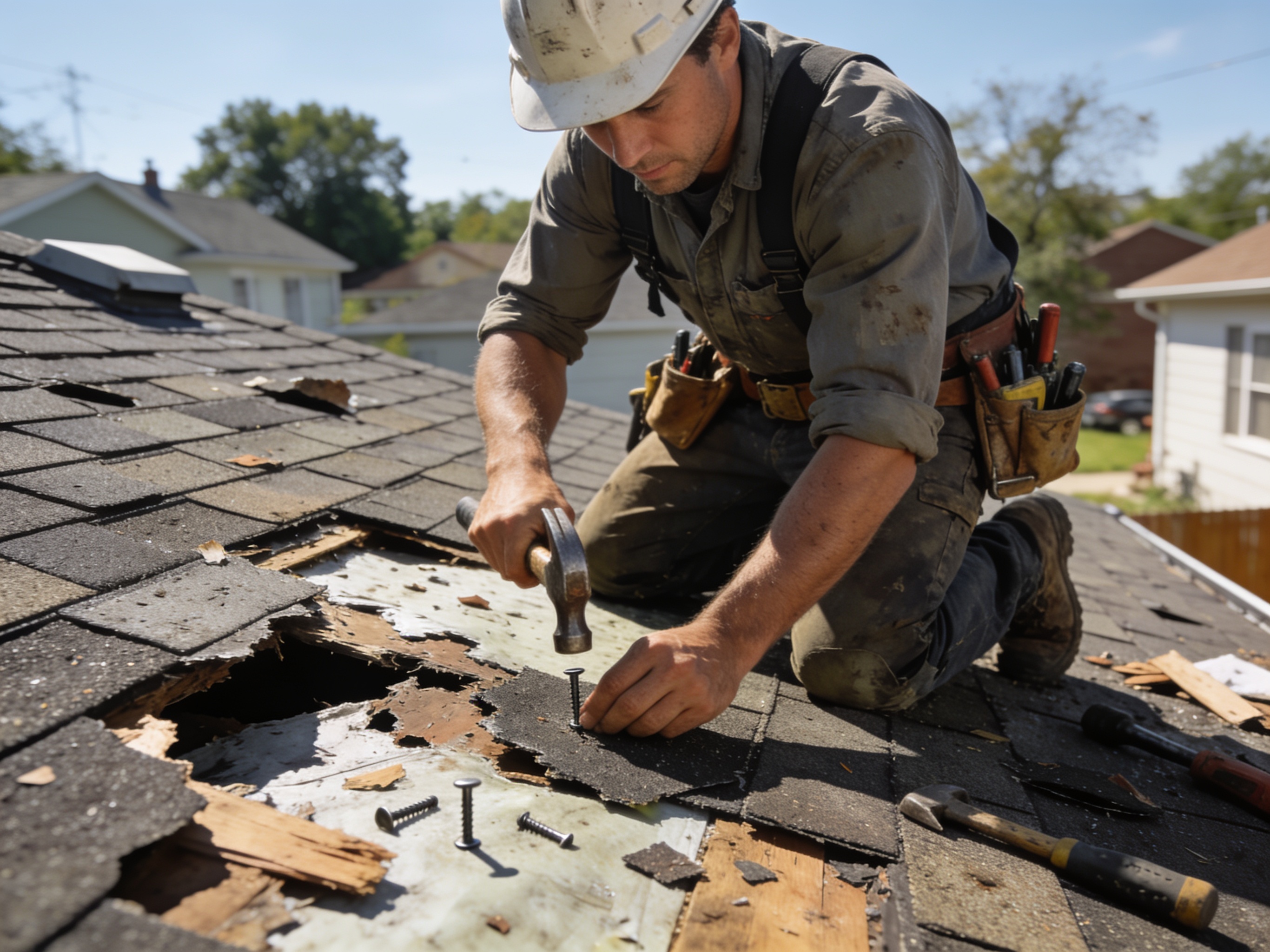
A repair is usually enough when the damage is localized. Examples include a few lifted or missing shingles, a single damaged vent boot, a bent section of flashing, or a dented gutter run, while the decking and underlayment beneath them remain sound. In that case the provider rebuilds the failed detail so it sheds water again and confirms that the surrounding material is still serviceable.
A broader conversation may come up when damage is spread across several slopes, the decking is soft, the shingles are too brittle to seal, or the roof is nearing the end of its service life. Citywide, the median year a structure was built is 1985 according to American Community Survey 2020–2024 figures, with 104,388 housing units and 63.1 percent of units being one-unit detached homes. Many Huntsville roofs are therefore old enough that wear and storm damage can overlap, which is why an honest inspection should separate the two before any scope is agreed.
What is included in a storm damage roof repair visit?
A typical visit from local providers includes a slope-by-slope exterior inspection of shingles or metal panels, flashing, pipe and vent boots, valleys, ridge vents, gutters and downspouts. The provider also checks visible soffit and fascia for impact marks or water signs. Where safe access allows, the inspection extends into the attic to look for staining, wet insulation, or daylight around penetrations, because the attic often shows where water has actually traveled.
The visit normally ends with a written, photo-documented summary of what was found, which findings appear storm-related, which appear wear-related, and which repair options are available. The decision about scope stays with you. Provider scope varies by property, and any permit question should be confirmed with the City of Huntsville before work starts, as explained in the FAQ below.
What sub-services do local providers offer after a storm?
Common sub-services connected through this page include temporary tarping or dry-in to stop water entry, shingle and underlayment replacement in affected areas, flashing and pipe boot repair, valley and ridge vent repair, roof decking repair where boards are soft or open, and gutter and downspout repair or reattachment. Some providers also remove storm debris such as tree limbs from the roof surface, depending on safety conditions and the agreed scope.
Metal roofing systems need their own attention. Panel straightening, fastener replacement and sealant work at seams and penetrations are typical sub-services for dented or displaced metal. Sub-service availability, materials and timing differ by provider, so ask each one which items they handle directly and which they refer to another specialist.
Still have questions? Let's talk through your storm damage.